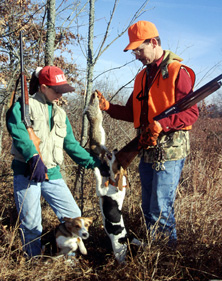
 Hunting rabbits with beagles can be an exciting experience for young hunters and veterans alike. Field Care and Cooking Few wild game meats are as delectable and versatile as rabbit. The flesh is delicate, white and lean, with just a hint of gaminess. It can be cooked in every conceivable way, from simply fried, baked or roasted to stews, casseroles and pies. The taste is comparable to that of chicken, and recipes for the two are interchangeable. For delicious fried rabbit, cut a rabbit into serving pieces and parboil in a pot with enough water to cover plus one hot pepper and four sliced cloves of garlic. When the rabbit is tender, remove from the heat and drain off the water. Combine 1 cup milk and 2 slightly beaten eggs in a shallow bowl. Dip the rabbit pieces in the egg mixture, dredge in plain flour seasoned with some salt and pepper, and fry the pieces until done to taste in 1/2 cup shortening heated in a skillet. Serves 2. This list of hunters conservation groups is only a small example of some of the larger nationally organized groups working towards not only improving the habitat of the game animals they pursue but the habitat and populations of all creatures who inhabit areas that sportsmen like to visit. Without hunters animal populations would become overwhelming and run out of control not to mention the millions of acres that America’s hunters are working to protect would be at risk for take over from development and be subject to degradation. The often-overlooked point is that hunters are the one of the most important conservation groups in the United States today. Their hard work, dedication, and love of their sport is probably the best thing that has happened to the wildlife |
.jpg)
Pre Rut Buck Rubswas once told by an Old Timer that bucks rub on trees to mark their paths. Ummm....okay. I have a small problem with that theory. Bucks live in their little patch of woods year round, why do they need trail markers just for the fall? How would they find their trail at other times of the year? I've never bout that piece of advice personally. The type of rubs I find during the hunting season leading up to the rut are what I call the Pre Rut Buck Rubs. These are rubs bucks make going to and from bedding and feeding areas. You'll likely find many along deer trails. Look for trees in your area that are very fragrant when the bark is peeled back. Sumac (called Shoe-Makes in my neck of the woods), Cedar and Pine are all favorites of bucks around here. Bucks love to rub trees like these. My theory of why bucks prefer these trees is that it's possible the thick sap holds scent from their glands for a longer period of time. I believe these rubs are bucks letting other bucks know they're in the area. Marking their territory so to speak. Kinda like your dog walking the perimeter of your yard and peeing on ever little bush it comes to. It's been my experience that bucks will make clusters of these rubs near their bedding area. Once you get outside of their bedding area, you'll start to see rubs spaced apart along a trail. You can sometimes tell when and what time a buck made the rubs by looking at which side of the tree the rub is on. If the rubbed part of the tree is facing the feeding area, it's likely this rub was made by a buck on his way back to his bed. That's generally in the Mornings. On the other hand, if you find the bare part of a rub facing the thicker bedding area, it's likely the buck made the rub in the afternoon or evening as he is heading to the feeding area. In big woods areas, I've also found these types of rubs between Doe groups. I can generally find these along ridgelines or along remove waterways such as creek beds. 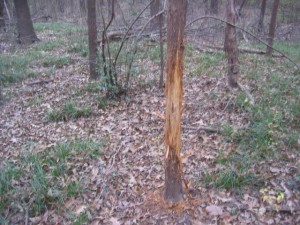 Nothing, and I mean nothing, screams "Big Buck" like a sign post rub. I don't think that there is another piece of buck sign, other than a sighting, that will tell you that you're dealing with a He Man of a buck. I've heard several theories of why big bucks make sign post rubs. But in my opinion, they're made to tell all other bucks to "stay clear, The Boss lives here." The buck that makes these rubs may rub smaller trees, and generally does. But I've never seen a smaller buck make a sign post rub. I generally find sign post rubs near a bucks bedding area. When I find one, I start paying real close attention to the surrounding area and on which side of the tree the rub is. It's not uncommon to find a sign post rub that has been rubbed entirely around the tree. Most sign post rubs I've seen have been on trees 2 inches in diameter and larger. The largest one I've ever seen was on a Cedar tree back in the sticks in Eastern Oklahoma. The tree was nearly 4 inches in diameter. If you find an area that has fresh sign post rubs and dead trees from previous years rubs, you've found the Mother Load. This tells you the buck has lived here for at least two years. |
